StoryMarket development
Hochul's Second Full Term Settled Kalshi's Governor Contract Thirteen Minutes After the Polls Closed
Kalshi had a Democratic hold at 96% on November 2, 2026, and the unofficial count put Hochul ahead by about 1.15 million votes, which means the 4% the market left to Blakeman was the price of an upset the voters never came close to.
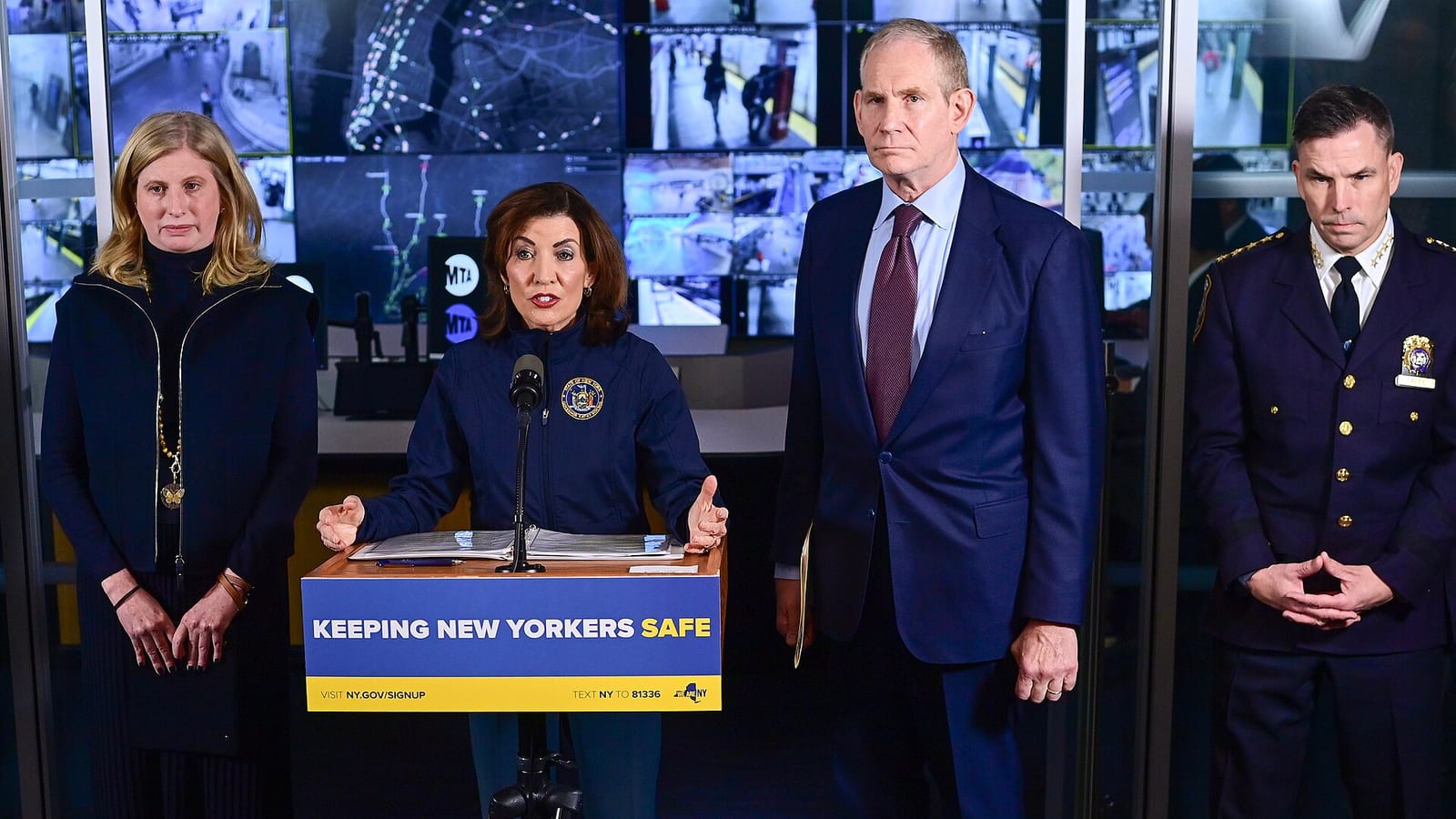
Governor Kathy Hochul won a second full term on November 3, 2026, defeating Republican Bruce Blakeman, the Nassau County Executive, and the Associated Press called the New York governor race right after the polls closed at 9 p.m., according to WNYC's report for the New York Public News Network. Kalshi's contract on which party would hold the governorship closed at 9:10 p.m. and settled on the Democratic side three minutes later, according to the exchange's own market data, so the New York governor market was finished before most of the state's votes had been counted.
The unofficial results available on November 5, 2026 confirm the call by a wide margin. With 12,179 of 13,187 election districts reporting in the State Board of Elections' unofficial election-night results, as compiled by New York Focus and last updated at 10:22 p.m. on November 4, 2026, the Hochul and Adrienne Adams ticket had 3,499,396 votes and the Blakeman and Todd Hood ticket 2,349,047. That is 59.8% of the votes cast for the two tickets against 40.2%, a lead of about 1.15 million votes. Those figures are unofficial, they exclude absentee, affidavit and military ballots counted after election night, and they become final only when the state certifies the count.
Where Hochul's lead came from
The county figures in the same unofficial count explain how a statewide race can be lopsided while most of the map is not. Blakeman led in 41 of New York's 62 counties. Hochul's margin came from New York City, where the five counties gave her 1,505,223 votes to Blakeman's 468,543, about 76% of the two-ticket vote. Outside the city the race was close to even: 1,994,173 for Hochul and 1,880,504 for Blakeman, about 51.5% to 48.5%.
Long Island was the closest part of the state. In Nassau County, where Blakeman is the county executive, Hochul led 242,958 to 238,923 with 1,006 of 1,083 districts reporting, and in Suffolk she led 270,778 to 266,738. Upstate, she carried Erie County, her home county, 188,096 to 153,065, along with Monroe, Onondaga and Albany. Westchester's figures in the unofficial count reflect only early and absentee ballots so far, because a programming error kept the county's scanners from reading Election Day ballots, which the county board began counting on November 4, 2026, according to Daily Voice.
What the governor market had priced going in
The exchanges never treated this as a close race, and the result says they were right to. On November 2, 2026, the evening before the vote, Kalshi had the Democratic Party at 96% to hold the governorship, the cheapest Yes on that side, with Polymarket at 97%, and both venues had the Republican Party at 4%. That price was steady for a month: Kalshi had the Democratic side at 96% on October 6, 2026 and at 96% on November 2, never below 94% in between, through a debate, a presidential rally and a run of polls. What the price was saying all autumn was that the race had a structural answer before it had a campaign one, because Republicans have not won a statewide election in New York since George Pataki's third term in 2002, as WNYC noted on election night.
The 4% the market left to Blakeman was the price of an upset in a state with twice as many Democrats as Republicans, and the count shows how far the result was from one. A 20-point gap is not the kind of finish a one-in-25 price anticipates; it is the kind of finish that makes the 4% look generous. The more useful comparison is with 2022, when Hochul beat Lee Zeldin by about six points, a narrower margin than expected, according to WNYC. The exchanges priced the 2026 race as safer than that one, and the voters agreed.
Trading did not slow down because the outcome looked settled. By November 5, 2026, about 12.45 million contracts had changed hands on Kalshi's two governor contracts and about $929K on Polymarket's market. Most of the Kalshi activity was on the Republican side, where about 10.25 million contracts traded against about 2.2 million on the Democratic contract, which is what a cheap long-shot contract tends to draw.
How the ballot lines added up
The governor's lead came through two ballot lines on each side. Hochul's 3,499,396 votes included 3,134,511 on the Democratic line and 364,885 on the Working Families line. Blakeman's 2,349,047 came from 2,080,003 on the Republican line, 229,593 on the Conservative line and 39,451 on the Vote Affordable line. The Working Families total alone was larger than Blakeman's Conservative and Vote Affordable votes combined.
The rest of the statewide ballot went the same way in the unofficial count. Attorney General Letitia James led Republican Saritha Komatireddy 3,481,797 to 2,302,654, and Comptroller Thomas DiNapoli led Republican Joseph Hernandez 3,714,221 to 2,036,294, both with the same 12,179 of 13,187 districts reporting. DiNapoli's lead was the widest of the three statewide races. The attorney general race has its own story and its own market.
Why the call came so fast
The speed of the call is part of the story the market told. A race decided by about 20 points in the unofficial count gives a news organization enough evidence to call it from the first returns, and the AP did. Kalshi's contract had a closing condition that let it end early once the outcome was clear, and the exchange's data shows the Democratic contract finalized as Yes and the Republican contract as No at 9:13 p.m. on November 3, 2026. Its rules tie the contract to the inauguration of a Democratic governor pursuant to the 2026 election, with a scheduled expiration of January 1, 2027.
That gap between settlement and inauguration is worth stating plainly for readers who held a position. On Kalshi the contract is closed and paid on the exchange's own terms. On Polymarket, Prediction Genius showed the Democratic side at 100% and the Republican side at 0% on November 5, 2026, which is the price of a known result; whether and when that venue pays out is a matter for its own resolution process.
What Blakeman's campaign ran on, and what it ran into
Blakeman campaigned on cutting income taxes, including eliminating them for individuals earning below 50,000 dollars and married couples under 100,000 dollars, and on blaming Hochul for utility bills and the state's tax rates, according to New York Focus. He campaigned alongside President Donald Trump at multiple rallies and events, WNYC reported, while Hochul tied him to the president throughout the race and spent about 30 million dollars on advertising for her record on energy rebate checks and a pause on data center construction. The market's read through October was that none of that moved the structure, and the two-point range Kalshi's Democratic price held for the whole month is the evidence for it.
What happens next
The next dated step in the governor's race is the start of the new term on January 1, 2027, the date on which Kalshi's contract had been scheduled to expire. Before then, county boards finish counting the ballots that arrive and are processed after election night, and the State Board of Elections certifies the statewide result; the unofficial lead is large enough that neither step is expected to change the winner. Hochul has said she will push universal childcare, housing and new energy sources, including nuclear power, in 2027, according to WNYC, and she will do it with Democratic majorities in both houses of the Legislature.
The New York governor market page carries the settled board and the full history of the race, and Kathy Hochul's page follows the governor. The Siena poll that the market had already priced past was the last big data point before the vote. Every New York race on the ballot is on elections, and the state's other political contracts are on politics.
Questions readers are asking
Who won the New York governor race in 2026?
Governor Kathy Hochul won a second full term over Republican Bruce Blakeman on November 3, 2026, in a race the Associated Press called right after polls closed at 9 p.m. The count is unofficial until the state certifies it.
What was the margin in the Hochul Blakeman race?
In the State Board of Elections' unofficial results as of 10:22 p.m. on November 4, 2026, with 12,179 of 13,187 districts reporting, Hochul had 3,499,396 votes to Blakeman's 2,349,047, about 59.8% to 40.2% of the two-ticket vote.
What did the markets say before the governor election?
As of November 2, 2026, Kalshi had the Democratic Party at 96% to hold the governorship and Polymarket at 97%, with the Republican Party at 4% on both, a price Kalshi had kept between 94% and 96% since October 6.
Has the New York governor market settled?
Yes on Kalshi. The exchange's data shows its Democratic governor contract finalized as Yes and the Republican contract as No at 9:13 p.m. on November 3, 2026; Polymarket showed 100% and 0% on November 5, 2026.
When does Hochul's new term begin?
The new term begins on January 1, 2027, the date on which Kalshi's governor contract had been scheduled to expire, after county boards finish counting and the State Board of Elections certifies the result.