StoryLocal news
No Court Order Blocks New Yorkers From Any Exchange, and the CFTC Says Exchanges May Not Do It Themselves
The CFTC gave exchanges 30 days on November 5, 2026 to end state-by-state access limits, which leaves New York's two undecided petitions, not any exchange's own rules, as the open question for New Yorkers.
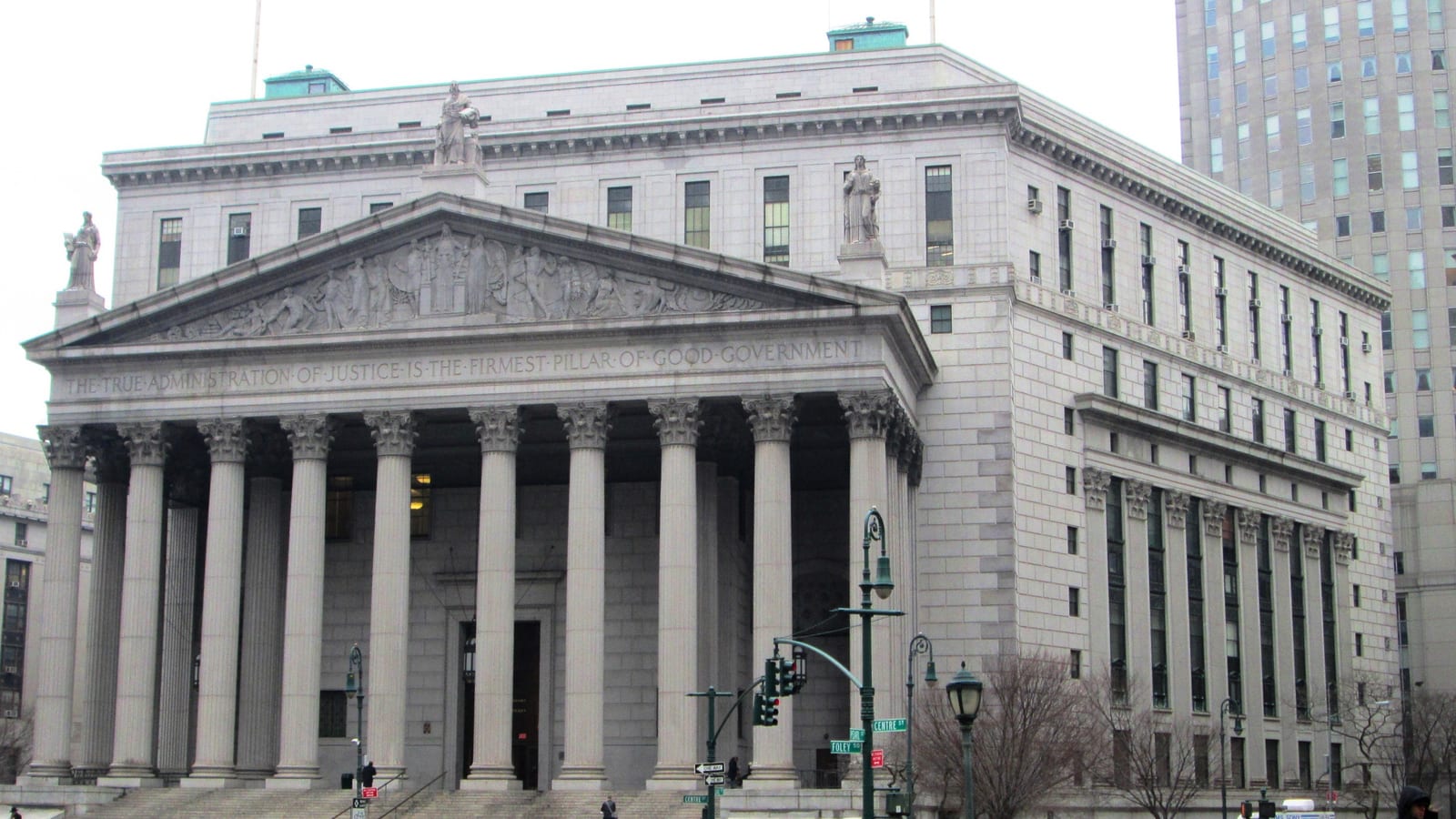
No court order requires Kalshi, Polymarket US or any other exchange to stop serving people in New York as of November 6, 2026, and on November 5, 2026 the Commodity Futures Trading Commission told federally designated exchanges that they may not shut out a state on their own. That leaves New York's own effort to stop two exchanges from serving New Yorkers without a state license where it already was: in court, undecided. The CFTC geographic restrictions guidance does not change a line of New York law or any order a New York court has entered.
The Commission's interpretation of its impartial access rule, Commission Regulation 38.151(b), was announced in press release 9323-26 on November 5, 2026. It reaches New York in two ways. The state is asking judges, in two petitions brought by Attorney General Letitia James, to bar Kalshi and Polymarket US from operating "within or from New York or to persons in New York" without a Gaming Commission license. And both companies are based here, so a guidance built on the idea that an exchange should serve every eligible American, wherever they live, lands on two exchanges that the state is trying to restrict in its own courts.
What New York has asked the courts to order
The Attorney General's petition against KalshiEX LLC, dated July 31, 2026, asks Supreme Court, New York County for an order "permanently enjoining Respondent and its principals, agents, and employees from operating an unlawful gambling business, or otherwise advancing gambling activity, or profiting from gambling activity, within or from New York or to persons in New York, without being licensed by the New York State Gaming Commission." The petition against QCX LLC, which does business as Polymarket US, filed September 24, 2026, asks for the same relief in the same words. Both petitions say the respondent's principal place of business is in New York, New York, and both allege that bettors located in New York can reach the platform by opening an account. Those are allegations in pending cases, not findings.
Neither request has been granted. Kalshi removed its case to the Southern District of New York the day it was filed, where it is 1:26-cv-06550 before Judge Vernon S. Broderick and the state's motion to send it back to state court has been fully briefed since August 28, 2026, with no ruling on the docket as of November 6. QCX also removed its case the day it was filed; in that docket, 1:26-cv-08338 before Judge Ronnie Abrams, a memorandum of law in opposition to a motion was entered on November 5, 2026, the day responses were due under the remand schedule, and replies are due November 16. The fight over which court hears Kalshi's case was the subject of an earlier story on the remand motion.
The Commission's own August 11, 2026 emergency order already addressed the reach of the state's request. Describing the temporary restraining order New York sought against Kalshi, it said that Kalshi, like other prominent exchanges, "is headquartered in New York, and thus, a state ban on offering event contracts 'within or from' the jurisdiction would necessarily preclude it from offering contracts to anyone, whether inside or outside New York," and it directed Kalshi to "continue to perform its functions as an exchange in accordance with the CEA's Core Principles and its normal practices."
What the Gaming Commission has demanded
The closest thing in the New York record to an instruction to stop serving New Yorkers comes from a regulator, not a judge. The New York State Gaming Commission's letter of October 24, 2025 told Kalshi that it "is not licensed by the Commission to offer a platform for sports wagering in New York" and demanded that it "cease and desist immediately" from making sports wagering or a mobile sports wagering platform available in New York. The letter covers sports contracts, and it is a demand, not a court order. According to the Kalshi petition, the Gaming Commission agreed on October 28, 2025 to hold off on enforcing it while Kalshi's federal injunction request was pending.
That request is no longer pending. In Kalshi's own suit against the Commission's members, 1:25-cv-08846, Judge Analisa Torres found on July 7, 2026 that "New York gambling laws as applied to Kalshi's sports-event contracts are not preempted by the CEA" and denied Kalshi's motion for a preliminary injunction. On November 3, 2026 a Second Circuit panel refused Kalshi an injunction pending appeal in No. 26-1835, in an order stating that the appellants "failed to make the required showing," covered in the story on the one-sentence order. Those rulings deny Kalshi protection. Neither orders Kalshi to do anything. The Gaming Commission has since gone to state court to make Kalshi answer its subpoenas, in a petition the court's filing system received on October 22, 2026 according to RG, and the Attorney General has a separate subpoena fight over Kalshi's advertising, set out in the story on the advertising probe.
What the exchanges' own rules say about New York
The platforms' own published terms show no New York block. Rule 3.1 of the Polymarket US rulebook dated September 30, 2026 asks an individual participant to be "at least 18 years of age" and to have "attained the age of majority in their state and/or country of residence," and names no state that is excluded. Robinhood's event contracts help page lists Maryland, Michigan and Nevada for sports contracts and, as of November 2, 2026, Ohio and Utah for certain categories; New York is not on the list. Kalshi's help center says its geographic restrictions are set out in its Member Agreement, which is not quoted here because its text could not be opened on November 6, 2026.
One product does not offer itself in New York, according to its own map. FanDuel's availability page, as posted on November 6, 2026, places New York in the column for its sports wagering app rather than for FanDuel Predicts, whose contracts are listed by CME Group exchanges and carried by FanDuel Prediction Markets LLC, a registered futures commission merchant. A footnote in the interpretation speaks to intermediaries: designated contract markets "must take reasonable steps to ensure that intermediaries, who must comply with DCM membership rules, do not impose geographic restrictions that violate impartial access." Whether a CME Group exchange or FanDuel changes anything in response is not in any record published by November 6.
What the guidance says, in short
The interpretation states that the Commodity Exchange Act and the Commission's rules "generally do not permit a DCM to limit access based on the location of an otherwise eligible market participant within the United States." The press release gives exchanges 30 days to "cease domestic geographic restrictions" or explain to the Division of Market Oversight why they cannot, and the same window to make sure intermediaries are not impeding access. The document takes effect when it is published in the Federal Register, and the Commission's newest entry there on November 6, 2026 was dated October 29.
Two of its examples are contracts with New York versions. It says a sports contract can draw "disproportionately regional interest (e.g., whether a home team advances to its playoffs)," the question behind the Buffalo Bills playoff market page, and that "statewide and more localized election markets may generate the most volume and/or knowledge from residents of the State or locality where the election takes place," the kind of contract on the New York governor market page. The guidance cites them as reasons not to exclude a state. It does not say anything about the price of either.
What the guidance does not do
The interpretation is the Commission's reading of its own rule. It does not repeal the Racing Law, vacate the Gaming Commission's letter or decide either of New York's petitions, and it does not override any court's order. Whether federal law displaces New York's licensing requirement for these contracts is a question for the courts. In the July 7 opinion, at the preliminary injunction stage, the federal court in Manhattan answered no for Kalshi's sports contracts, and that ruling is on appeal.
Two reactions on November 5 framed it from opposite ends. Chairman Michael S. Selig said in the release: "Geographic access restrictions are inconsistent with those purposes and the Act's impartial access requirements." Adam Schiff, a United States senator, wrote on X that "Sports prediction markets are sports bets" and called the move "the CFTC's most egregious attempt yet to undermine state law, the Tribes, and now, the courts." The Attorney General's office, the Governor's office and the Gaming Commission had not commented as of 1:16 p.m. Eastern on November 6, 2026, according to their press pages.
Where New York's cases stand platform by platform is on the New York legal status page and the Kalshi legal page. The other suits against state officials, brought by Ludlow Exchange and by the exchange that does business as OG, are covered in earlier stories.
What happens next
The next dated step in a New York case is November 16, 2026, when the state's reply is due on its motion to send the Polymarket US case back to state court. Counted from the November 5 release, the Commission's 30-day window runs to December 5, 2026; the release does not say whether the count starts on that date or on publication in the Federal Register, which had not happened by November 6. In the Second Circuit, Kalshi moved on November 5, 2026 for leave to file an oversized brief in No. 26-1835, and no argument date for the appeal itself is on the docket.
Questions readers are asking
Is any exchange blocked in New York by a court order?
No. As of November 6, 2026 no court order requires Kalshi, Polymarket US or another exchange to stop serving New York: the state's July 31 and September 24, 2026 petitions asking for that are undecided, and the Second Circuit's November 3 order only denied Kalshi an injunction.
What did the CFTC say about geographic restrictions on November 5, 2026?
Its interpretation of Regulation 38.151(b) says the Commodity Exchange Act generally does not let a designated contract market limit access by a participant's location within the United States, and its release gives exchanges 30 days to end such limits or explain to the Division of Market Oversight why they cannot.
Does the CFTC guidance override New York gambling law?
No. It is the Commission's reading of its own rule and does not vacate the Gaming Commission's October 24, 2025 demand to Kalshi or decide New York's petitions; whether federal law preempts the state's licensing rules is for the courts, and the July 7, 2026 federal opinion said it does not for Kalshi's sports contracts.
Do Kalshi or Polymarket US block New York users?
Not by any published rule found on November 6, 2026: the Polymarket US rulebook dated September 30, 2026 excludes no state, and Kalshi's Member Agreement, where its help center says geographic limits are set, could not be opened. New York's petitions allege that people in New York can open accounts on both.
What happens next in New York's prediction market cases?
Replies are due November 16, 2026 on the state's motion to return the Polymarket US case to state court, and the CFTC's 30-day window, counted from the November 5 release, runs to December 5, 2026; no date is set for a ruling on Kalshi's remand motion or for argument of its Second Circuit appeal.