StoryLocal news
Kalshi Has Produced No Documents on Its Advertising, New York's Attorney General Tells a State Court
The petition received November 2, 2026 asks a New York County judge to order compliance with a September 25 subpoena within 10 days, which puts the office's advertising inquiry before a state court on a track separate from its July gambling case.
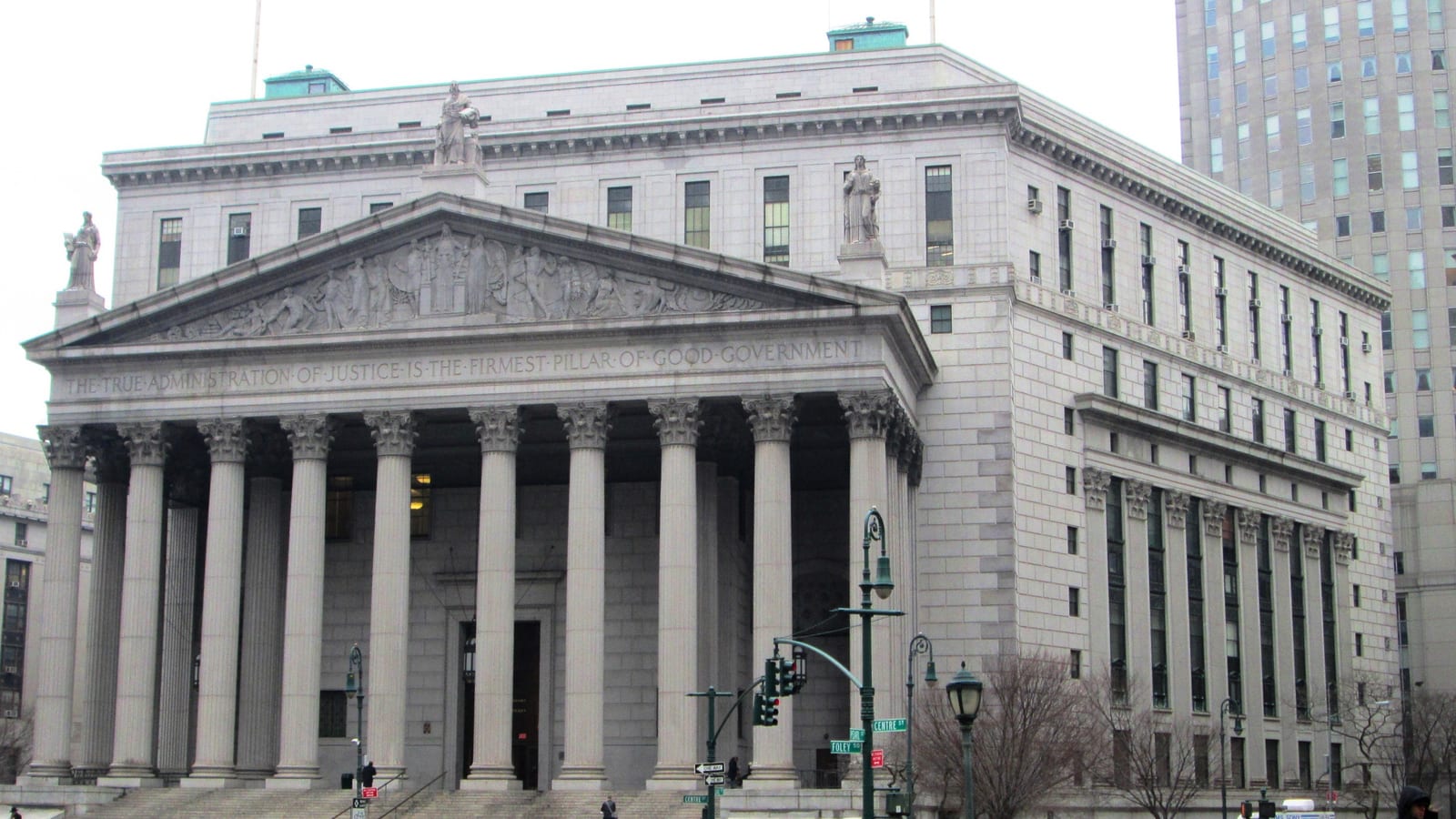
The New York Attorney General's office says Kalshi has not produced a single document in answer to a subpoena about its advertising, and on November 2, 2026 it asked a state judge in Manhattan to order the company to comply. The filing is a verified petition by Attorney General Letitia James against KalshiEX LLC, the company the petition calls Kalshi, and it seeks an order under CPLR 2308(b) directing Kalshi to answer a subpoena her office issued on September 25, 2026, within 10 days or on whatever schedule the court sets, and to pay the office a penalty.
The petition was filed in the Supreme Court of the State of New York, County of New York, and was received by the court's electronic filing system on November 2, 2026 as NYSCEF Doc. No. 1. The copy made public carried no index number, no IAS part and no assigned justice, and its pages bore the clerk's legend that the document had not yet been reviewed by the County Clerk. The office had not announced the filing in a press release by the afternoon of November 3, 2026. Gaming attorney Daniel Wallach posted pages of the petition late on November 2; the account below of what it says rests on those pages, and every claim in it is an allegation by the Attorney General that no court has tested.
What the Attorney General says it is investigating
The petition describes the subpoena as part of the office's "ongoing civil investigation into potential fraud and deceptive conduct by Kalshi and other third-parties in the prediction market industry." According to its first paragraph, the investigation seeks to determine "whether Kalshi and/or third-parties on behalf of Kalshi made false and/or misleading representations and/or omissions in advertisements to consumers about Kalshi's business."
A later passage states why the office says the documents matter. Its demands, the petition says, "concern potential false or deceptive advertising by Kalshi," and examining Kalshi's advertising and marketing materials, "the terms of its arrangements with third parties to promote Kalshi's business, and the role of Kalshi's in-house and external market makers" is "critical to OAG's ability to determine whether Kalshi (or others on its behalf) engaged in fraudulent or deceptive conduct and/or made false or misleading statements to consumers in its advertising."
Wallach summarized the petition as probing influencer claims of large wins while most users lose, paid promotions that are not disclosed, and Kalshi's statements that it has no house, set against an in-house market maker that takes the other side of trades. Those are his words, not language that appears in the pages he posted. The PM Pulse, a prediction market newsletter, reported on November 3 that the petition cites a Wall Street Journal report that paid creators often do not disclose sponsorship, a referral by the National Advertising Division to regulators after Kalshi declined to respond to it, and a newsletter's account of a Discord server that pays users for Kalshi clips.
What the subpoena asks Kalshi to hand over
Paragraph 37 of the petition lists what the September 25 subpoena demanded, "among other things." The list runs in eight parts:
• documents and communications about the marketing, advertisement or promotion of Kalshi's business by Kalshi, by Tarek Mansour and Luana Lopes Lara, by any executive officer, director or employee, or by anyone Kalshi hired to advertise it;
• records of any transactions on Kalshi's platform by the people or companies Kalshi hired to promote it;
• records of payments Kalshi made to those promoters;
• training materials, guidance, policies and procedures on how Kalshi's business is marketed;
• documents about any proprietary trading, market making or liquidity provision Kalshi itself conducts on its platform;
• documents about arrangements or partnerships with third-party market makers;
• documents about five named programs: the Kalshi Volume Incentive Program, the Liquidity Incentive Program, the Liquidity Provider Program, the Combo Incentive Program and the Market Maker Program;
• documents Kalshi produced to any other state or federal regulator, governmental body or self-regulatory organization on the same subjects.
Mansour and Lopes Lara are Kalshi's co-founders, as the Times Union described them in October. The list reaches past the advertisements themselves. Two of the eight items concern trading by Kalshi itself and by outside market makers, and a third names the exchange's incentive and market maker programs. The petition ties those items to the advertising question directly, naming "the role of Kalshi's in-house and external market makers" among the things the office says it needs to examine.
Paragraph 38 states the office's complaint in one sentence: "To date, Kalshi has failed to produce a single document demanded by the Subpoena and therefore, is out of compliance." The same paragraph adds that the office "is entitled to document production to investigate whether fraud is occurring and to enjoin any fraudulent conduct it uncovers as soon as it does to minimize harm to consumers."
Why this is not the gambling case
New York already has a case against Kalshi, and this petition is not part of it. On July 31, 2026 the Attorney General filed a proceeding under Executive Law section 63(12) that, in the words of a later court letter, seeks "to ban Kalshi from offering event contracts within or from New York unless it obtains a Gaming Commission license." Kalshi removed that case to federal court, where it is People ex rel. James v. KalshiEX LLC, No. 26 Civ. 6550, before Judge Vernon S. Broderick in the Southern District of New York. The fight over which court should hear it was the subject of an earlier story on the remand motion, and a joint letter the two sides filed on October 30, 2026 described the state's motion to send the case back as still pending on that date.
That joint letter, docketed as Doc 23, put the subpoena in front of Judge Broderick. According to page one of the letter, which Wallach posted on November 1, the subpoena dated September 25 was issued by the office's Investor Protection Bureau and is called the "Revised Subpoena." It followed an earlier investigative subpoena, which the letter says the same office served on July 31, the day the gambling case was filed, seeking records on whether Kalshi "complies with state gaming laws," on proprietary trading and market making, on advertising and on communications with regulators. The letter says Kalshi objected in writing on August 21, and that lawyers for the two sides met by video on September 11 and again on October 26 without resolving their disagreements.
Kalshi's position
Kalshi's stated position on this subpoena is the one it gave Judge Broderick in that letter. It asked him for a protective order under Federal Rule of Civil Procedure 26(c), or alternatively under the All Writs Act, "barring OAG from obtaining discovery about the claims in this action through the Revised Subpoena and directing OAG to seek such discovery here under the federal rules." Its argument in one line: "A party may not use a non-judicial subpoena to evade the discovery rules." The letter also restates the company's broader position that it "offers federally regulated derivatives on its designated contract market under the Commodity Exchange Act, subject to the exclusive jurisdiction of the Commodity Futures Trading Commission."
The Attorney General's side of that letter was not on the page Wallach posted. In his post, and in The PM Pulse's account of the same filing on November 2, New York's position is that the subpoena serves a separate investigation into potentially deceptive advertising rather than discovery in the pending gambling case. The November 2 petition makes the same distinction on its face: it describes an investigation into potential fraud and deceptive advertising and asks a state judge, not the federal one, to enforce the subpoena.
The subpoena dated September 25 is therefore before two courts. In federal court, Kalshi has asked Judge Broderick to bar the Attorney General from using it to gather evidence for the gambling case. In New York County, the Attorney General has asked a state judge to make Kalshi answer it.
The second state-court subpoena fight in two weeks
The petition is also the second time in two weeks that a New York agency has gone to the same court to make Kalshi answer a subpoena. The State Gaming Commission, represented by the Attorney General's office, filed its own verified petition against Kalshi Inc. and KalshiEX LLC in Supreme Court, New York County, received on October 22, 2026, according to RG, which reported it on October 25. RG reported that the commission issued its subpoenas on July 31, 2026 under Racing Law section 104(7), with a return date of August 14.
The two petitions come from different agencies under different laws. The Times Union reported on October 27 that the commission wants the total amount New York consumers paid or traded on Kalshi, the number of sports contracts bought or traded by users under 21, records of Kalshi's advertising and marketing, and details of its ownership and corporate structure, to help it decide which Kalshi products violate the Racing Law and what civil penalties, if any, apply. The paper reported that a Kalshi letter called the commission's subpoenas "an impermissible end-run around the discovery process" in litigation where the commission's members are already parties, and "an improper fishing expedition into Kalshi's business." The Attorney General's petition is framed around potential fraud and deceptive advertising under the office's own investigative power rather than around the Racing Law.
Earlier coverage of New York's other prediction market cases includes the suits brought by Ludlow Exchange and by the exchange that does business as OG. Kalshi's standing under New York law is tracked on the Kalshi legal page, and the state's wider position on the New York legal hub.
What the petition does and does not ask
A subpoena-enforcement petition asks a court to make someone produce documents. The petition does not ask the court to decide whether Kalshi's advertising was deceptive, and its own wording keeps to "potential" fraud and deceptive conduct. What it asks for is an order directing compliance and a penalty; the documents, if produced, go to the office's investigation, and any claim that came out of that investigation would have to be brought and proved on its own.
What comes next
The next step belongs to the state court. The petition received on November 2, 2026 had no index number, IAS part or assigned justice in the copy made public, and no return date or hearing date appeared in its pages. Until a justice is assigned and a schedule set, the request for production "within 10 days" has no start date. In federal court, Kalshi's request for a protective order, made in the October 30 joint letter, is the other half of the same dispute, and Judge Broderick sets his own schedule for it.
Questions readers are asking
What did the New York Attorney General file against Kalshi?
A verified petition in Supreme Court, New York County, received November 2, 2026 as NYSCEF Doc. No. 1, asking for an order under CPLR 2308(b) that makes KalshiEX LLC comply within 10 days with a subpoena the office issued on September 25, 2026, and pay a penalty.
What records does the New York subpoena demand from Kalshi?
Paragraph 37 of the petition lists marketing by Kalshi, Tarek Mansour, Luana Lopes Lara and anyone Kalshi hired to promote it, those promoters' trades and payments, marketing policies, Kalshi's own trading and market making, third-party market maker arrangements, five incentive and market maker programs, and documents given to other regulators.
Is the subpoena fight part of New York's gambling lawsuit against Kalshi?
It is filed as a separate state-court proceeding: the gambling case filed July 31, 2026 under Executive Law section 63(12) is in federal court as No. 26 Civ. 6550. Kalshi argued in an October 30, 2026 letter to Judge Vernon S. Broderick that the office is using the subpoena to get discovery for that case.
What has Kalshi said about the Attorney General's subpoena?
In the October 30, 2026 joint letter, Kalshi asked Judge Broderick for a protective order barring the office from using the September 25 subpoena to obtain discovery about the federal case, arguing that a party may not use a non-judicial subpoena to evade the discovery rules.
When will a judge rule on the Kalshi subpoena petition?
No date appears in the copy made public: the petition received November 2, 2026 had no index number or assigned justice, so the requested 10-day window for production has no start date until the New York County court sets a schedule.