StoryLocal news
New York Has Not Had to Answer Ludlow Exchange Yet, and Its First Required Brief Is Due September 10
Judge Colleen McMahon denied the exchange's restraining order on August 11, 2026 without asking the state to respond, which makes the brief now due September 10 New York's first substantive filing in the case.
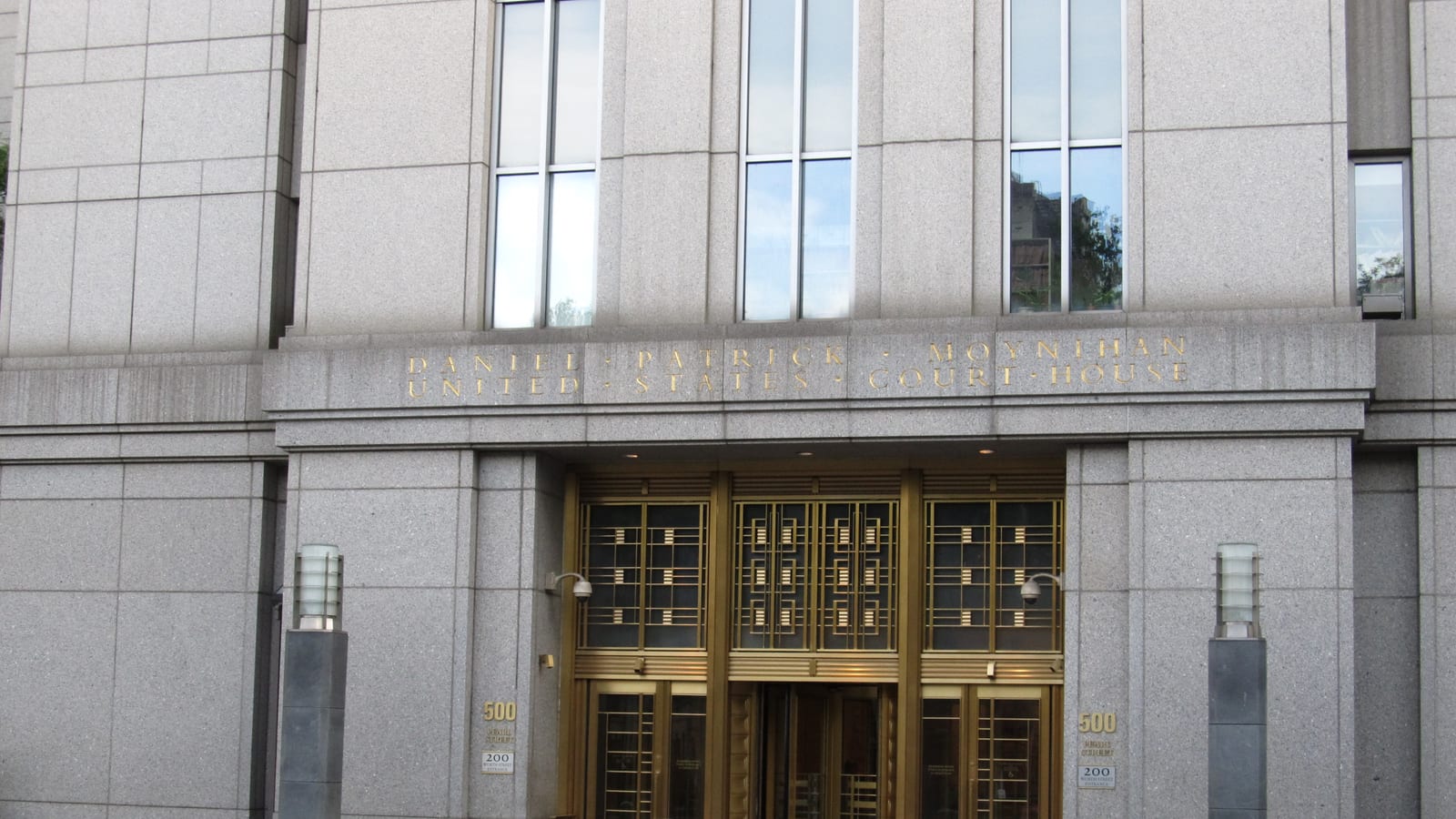
New York's brief opposing a preliminary injunction for Ludlow Exchange, LLC is due on September 10, 2026, and as of September 2, 2026 the state has not had to argue anything in the case. Judge Colleen McMahon denied the exchange's application for a temporary restraining order on August 11, 2026, the day after the case reached her, and wrote in the same order that there was no need for the Attorney General to respond to that application (Doc 38).
The case is Ludlow Exchange, LLC v. James, 1:26-cv-06676 in the Southern District of New York. The exchange sued Attorney General Letitia James, Gaming Commission Executive Director Robert Williams and the commission's members, and moved for a preliminary injunction (Doc 23). It landed with Judge McMahon on August 10, 2026 after Judge Analisa Torres declined it as not related to KalshiEX LLC v. Williams, the case in which Torres denied Kalshi a preliminary injunction on July 7, 2026 (Doc 106). Magistrate Judge Robert W. Lehrburger was designated the same day for any matters referred.
One order, three decisions
Doc 38 is short for what it does. In a single order signed August 11, 2026, Judge McMahon explained why the case was hers rather than Judge Torres's, refused the emergency relief the exchange had asked for, and set the entire briefing schedule the parties are still working through. The exchange had come in by order to show cause with emergency relief; the clerk's office recorded on the same day that the proposed order at Doc 27 had been reviewed and approved as to form.
The refusal is stated in terms that are about procedure and not about the exchange's arguments. Judge Torres, McMahon wrote, had denied Kalshi's motion for a preliminary injunction "after having the benefit of full briefing from both sides." She would not issue any order in her own case "without the benefit of full briefing," and would not "undermine Judge Torres' decision by entering any order granting emergency relief without full briefing from both sides." Because of that, she wrote, "there is no need for the Attorney General to respond to the application for a TRO. That application is DENIED." She then set out the limit of what she had just done: "while I am denying the TRO application, I have not decided the case on the merits."
Why it is not in front of the judge who has heard this before
The same order is the clearest account in the New York record of why these suits are spread across several courtrooms. Judge Torres, McMahon wrote, "properly declined this case as 'related'" under the local rules for the division of business among judges of the district, because although the case "deals with the same statute as Kalshi and appears to raise the same legal issues and arguments against state regulation of 'derivatives transactions' (or, maybe, gambling) as were raised in Kalshi, this is a different plaintiff." She added the general rule directly: "The fact that two cases between different parties raise the same legal issues does not make them 'related' under our rules."
She was equally direct about the incentives on both sides. She could understand, she wrote, why the Attorney General had tried to get the matter assigned to Judge Torres, because the case had been filed shortly after Torres issued a comprehensive opinion denying emergency and preliminary relief in the Kalshi case, and it was "obvious that the plaintiff in this case is impacted by the Kalshi decision and hopes, by filing this action, to get around that decision by convincing another judge in this district to reach a different conclusion." Then the sentence that governs everything after it: "I do not intend to prejudge the merits of this case," and "I may or may not reach the same ultimate conclusion as Judge Torres."
The decision she was reading is a 22-page opinion and order issued on July 7, 2026 in 25 Civ. 8846. It works through the four factors a federal court weighs on a preliminary injunction, concludes that all four weigh against issuing one, and denies Kalshi's motion. Judge Torres also granted Kalshi's motion to seal two exhibits containing information the company had submitted to the Commodity Futures Trading Commission. Nothing in that opinion binds the Ludlow case, and Judge McMahon said as much in writing.
The schedule, and the four times it has moved
The August 11 order set a fast timetable: the Attorney General would file a responsive brief to the injunction motion by August 21, the exchange would reply by August 31, and oral argument would be held on September 11 at 11 AM in Courtroom 24A at the Daniel Patrick Moynihan courthouse. Judge McMahon also floated a shortcut. Because the case raised only legal issues, she was "inclined to merge the motions for preliminary and permanent injunctive relief and enter a final judgment after one round of briefing," and directed any party objecting to that procedure to say so in writing by August 13 at 5 PM and to explain why discovery would be needed. She added her own view of that question: "At the present time I can see none."
Both parts of the schedule then moved. On August 12 the state asked for more time and for leave to file an oversized brief (Doc 39); the court granted the extension the same day and reset the response date to September 10 (Doc 40). The exchange filed a notice of supplemental authority the same day (Doc 41). On August 13 counsel for the defendants wrote to the court about the August 11 order (Doc 43); the exchange answered that letter on August 14 (Doc 44); and Judge McMahon resolved it that day in a memo endorsement (Doc 45): "Since the Attorney General objects to merging the preliminary and permanent injunction motions, the Court will not do so. I will decide the motion for a preliminary injunction and we will adhere to the present briefing schedule. The AG is of course welcome to move to dismiss the complaint, but will have to be on its own schedule."
The third and fourth movements are smaller and point the same way. On August 19 the state asked for leave to file excess pages with its opposition memorandum (Doc 47), which was granted that day (Doc 49), and separately asked for more time to respond to the complaint itself (Doc 48); the exchange opposed that second request the same day (Doc 50). Then, on August 27, a memo endorsement was docketed that resets hearings in the case (Doc 51). Its text does not appear in the public record, so no argument date is stated here, and the September 11 date the August 11 order fixed cannot be confirmed from it.
What the state has and has not said
The practical effect of all of it is that New York has filed three notices of appearance, one letter to the court, three procedural requests and no argument. The Attorney General's first substantive filing in this case will be the opposition brief due September 10, 2026, a month to the day after the case reached Judge McMahon, and that gap follows directly from her decision that she did not need to hear from the state before refusing emergency relief.
It also means the shape of the state's position in this particular case is not yet on the record. Its arguments against a different exchange are, in a different courtroom: North American Derivatives Exchange, Inc., trading as OG, has its own preliminary injunction motion set for argument before Judge Lorna G. Schofield on September 14, 2026, covered in the hearing that tests New York's enforcement power. And in the case the state itself brought, against Kalshi, the only fully briefed motion is about which courthouse should hear it, covered in the remand motion that has stalled the Attorney General's own case.
What is next, and when
The fixed date is September 10, 2026, when New York's opposition to the preliminary injunction is due. The exchange's reply and the argument Judge McMahon said she requires both come after it, and the order that resets the hearing calendar carries no readable text, so the argument date is the next thing on this docket that the record will have to supply. Filings across New York's exchange cases are listed on the legal status page.
Questions readers are asking
Has New York had to answer Ludlow Exchange yet?
No. Judge Colleen McMahon denied the exchange's restraining order on August 11, 2026 and wrote in the same order that there was no need for the Attorney General to respond (Doc 38), so the state has argued nothing in the case so far.
Why is this case not before the judge who heard Kalshi's?
Judge Analisa Torres declined it as not related because it is a different plaintiff, and Judge McMahon wrote that two cases between different parties raising the same legal issues are not related under the court's rules.
Did the judge decide anything about the merits when she denied the restraining order?
No. Judge McMahon wrote in the August 11, 2026 order that she had not decided the case on the merits, that she did not intend to prejudge it, and that she may or may not reach the same ultimate conclusion as Judge Torres did in the Kalshi case.
What is due next in the case?
New York's brief opposing a preliminary injunction, due September 10, 2026. The exchange's reply and the argument McMahon said she requires both come after it, and a memo endorsement docketed on August 27, 2026 reset hearings without a text in the public record.
Sources 2 · as the story cites them
- Docket entries, Ludlow Exchange, LLC v. James, 1:26-cv-06676 (S.D.N.Y.), CourtListener v4 search API — courtlistener.com · primary ·
- Opinion and Order, KalshiEX LLC v. Williams, 1:25-cv-08846 (S.D.N.Y.), Doc 106, July 7, 2026 — ag.ny.gov · primary ·