StoryLocal news
Judge Rules Novig's Sports Contracts Are Not Swaps and Refuses to Block New York's Gambling Laws
The 35-page opinion filed November 10, 2026 holds that Novig's contracts fall outside the federal definition of a swap, which means no court order bars New York's officials from applying the state's gambling and sports-wagering laws to the New York-based exchange.
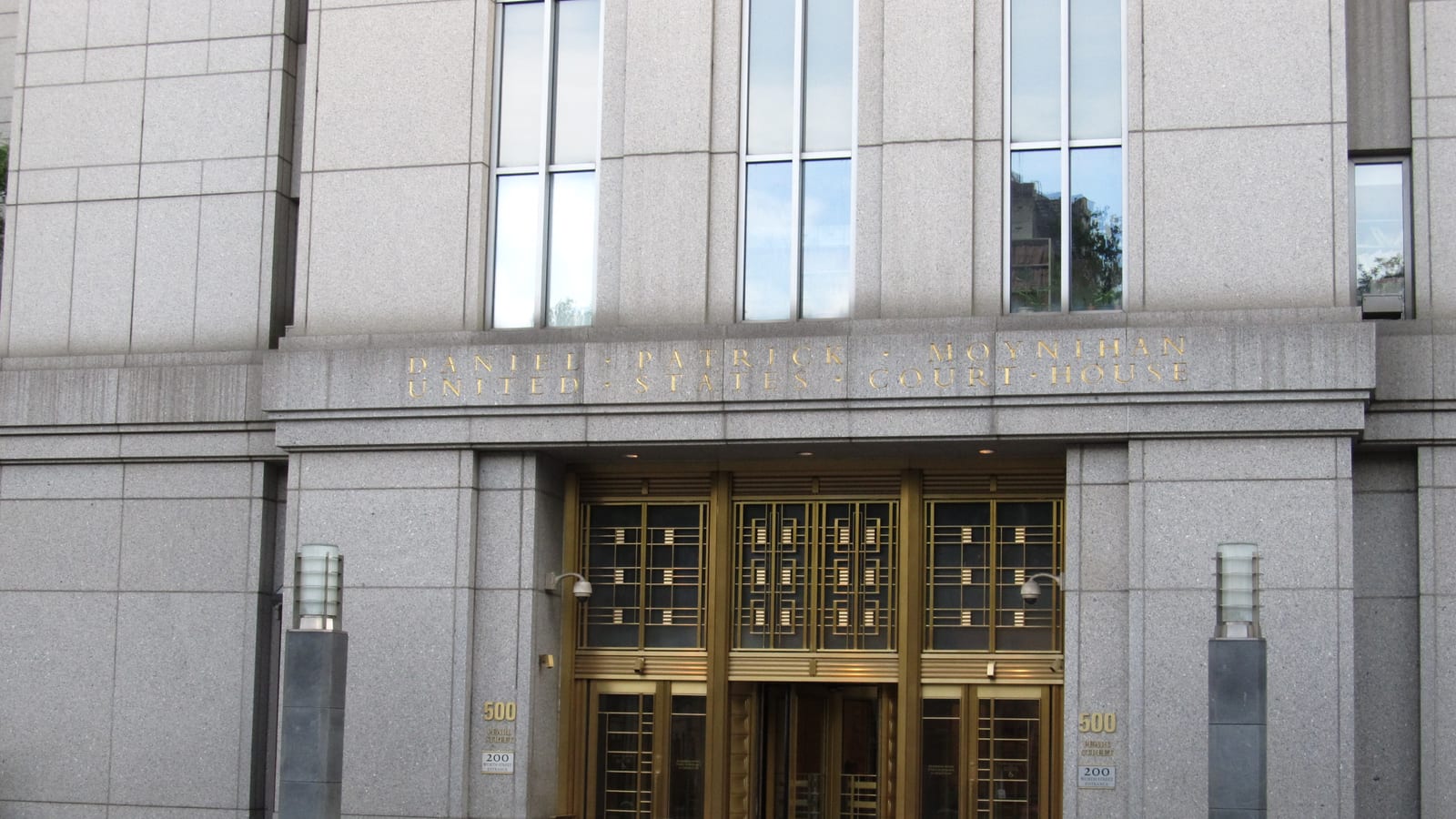
Judge Colleen McMahon of the Southern District of New York denied Novig's motion for a preliminary injunction against New York's Attorney General and Gaming Commission on November 10, 2026, ruling in Novig's lawsuit that the exchange's sports event contracts are not "swaps" under the Commodity Exchange Act. The 35-page Opinion and Order, Document 73 in Ludlow Exchange, LLC v. James, 1:26-cv-06676, concludes that New York "can apply its gambling and sports-wagering laws to Novig's activity by requiring it either to obtain a state gambling license or to prohibit the listing and trading of those contracts" on its exchange.
The plaintiff is Ludlow Exchange, LLC, which does business as Novig. The opinion describes it as headquartered in New York, designated by the Commodity Futures Trading Commission as a contract market on June 16, 2026, and offering sports-related event contracts to customers in the state since August 2026. The defendants are sued in their official capacities: Letitia James as Attorney General, Robert Williams as executive director of the New York State Gaming Commission, Brian O'Dwyer as its chair, and the commission's other members. The ruling therefore turns on New York's own licensing law as enforced by New York's own officials.
What the order does and does not do
The decision is a preliminary one, and the opinion says so in its first pages: the holding is reached "at this preliminary injunction stage." To win an injunction, Novig had to show a clear or substantial likelihood of success on its claim that federal law preempts New York's gambling and sports-wagering laws as applied to its contracts. McMahon found that it had not, did not reach the other three requirements for an injunction (irreparable harm, the balance of equities and the public interest), and directed the Clerk of Court to terminate the motion at Docket 23.
The order directs Novig to do nothing. It refuses to stop the state. No enforcement proceeding by New York against Novig appears in the opinion or on the docket as of November 10, 2026; the opinion records that Novig sued "in anticipation that similar enforcement action would be taken against its own sports-related contracts," after the Gaming Commission's October 2025 directive to Kalshi, proceedings the Attorney General began in April 2026 against Coinbase Financial Markets, Inc. and Gemini Titan LLC, and the state's July 31, 2026 action against Kalshi. The practical consequence is narrow and concrete: no court order in the record bars New York's officials from acting against the exchange, and the alternatives the opinion says the state may require are a state license or no listing and trading of those contracts on Novig's exchange.
Why the contracts are not swaps
The Commodity Exchange Act gives the CFTC "exclusive jurisdiction" over swaps traded on a designated contract market, and it defines a swap to include a contract whose payment depends on "an event or contingency associated with a potential financial, economic, or commercial consequence." McMahon took the definition in two halves.
On the first half she sided with Novig. Following the Third and Sixth Circuits, she held that a contract on whether the Giants win by a stated margin, or whether a named player scores a touchdown, is a contract on an event or contingency. She rejected New York's argument, which courts in Connecticut and Nevada had accepted, that the outcome of a game is not the "occurrence" of an event. The statute's own words, she wrote, include the "extent of an occurrence," which is hard to square with a reading limited to whether a game is played at all.
The second half decided the motion. The phrase about financial, economic or commercial consequence, she wrote, has to be read alongside the parts of the definition on either side of it, which speak of interest rates, currencies, commodities and securities, and alongside the Act's stated purpose of managing price risk. She adopted the Sixth and Ninth Circuits' narrower reading, that the events must be "inherently associated with potential financial consequences." A farmer buys a futures contract to protect against a collapse in the price of a crop; sports contracts, quoting the Ninth Circuit, "create risk, largely for ordinary consumers." Novig had offered hypothetical hedging uses, such as a hotel protecting itself against a local team's early playoff exit, but "not a single real-world example." The opinion points to the state's exhibit of a press release announcing a partnership between Novig and the New York Mets as evidence of who the product is marketed to.
The third reason was what the broader reading would do. The Act makes it unlawful to enter into a swap except on a designated contract market, so if every sports contract were a swap, the opinion reasons, traditional wagering at state-licensed operators and even informal wagers between friends would fall under federal law. McMahon also declined to defer to the CFTC. Citing Loper Bright, she wrote that the court owes the agency's reading no deference, and she called the Commission's October 19, 2026 interim final rule, which says casino-style gambling products are not swaps, and its proposed rule of the same day, which would define sports event contracts as swaps, "inherently contradictory." She wrote that the agency's change of position "appears calculated to influence the outcome of the ongoing litigation," and gave the proposed rule no weight because proposed regulations have no legal effect. Because the contracts are not swaps, the court held, they fall outside the CFTC's exclusive jurisdiction, which disposed of the express, field and conflict preemption claims together.
The fallback holding
McMahon then addressed the question again "in the event that a higher court disagrees," assuming the contracts are swaps. Reading the exclusive-jurisdiction clause together with the savings clause in the next sentence, she concluded that states "may not directly regulate the operation or licensing" of designated contract markets, but that the Act "does not prevent the incidental application of state gambling regulations." She drew the line with Minnesota's May 2026 statute criminalizing prediction markets, which a federal court there found likely preempted in part, and contrasted it with New York's use of laws it already had. She quoted Novig's own statements, among them "Our mission is to democratize and financialize sports betting," before writing that "Novig's sports event contracts are sports betting."
The conflict-preemption argument fared no better. Novig cited the CFTC's August 11, 2026 order directing Kalshi to continue operating its exchange as normal. The opinion says that order "smacks of a collusive effort between a regulator and regulatee to generate a claim for conflict preemption," and notes that the Commission's own Regulation 40.11 currently prohibits listing contracts that relate to gaming. Compliance with both regimes is possible, the court found: Novig held a Colorado sports-wagering license in 2023 before returning it, it could seek one in New York, and it could use geofencing to serve only customers physically in the state.
Where it sits among New York's other cases
The record ties this order most closely to Kalshi's appeal. The opinion notes that New York told the court of the Second Circuit's summary order denying injunctions pending appeal in three cases brought by Kalshi and Coinbase, which "raise essentially the same issues as this case," and that a merits panel will take up the issue with no date yet set for argument. That order, entered November 3, 2026 in No. 26-1835 together with Nos. 26-2239 and 26-2297, says only that the appellants "failed to make the required showing" (the Second Circuit's one-sentence order). Since then the appeal docket shows amicus briefs filed on November 6 by Better Markets, by Ohio, Nevada and 35 other states with the District of Columbia and the Northern Mariana Islands, by Gary Gensler and by the American Gaming Association, and on November 9 by the Indian Gaming Association and the National Congress of American Indians.
Two other suits against New York's officials sit before Judge Lorna G. Schofield. In the case brought by North American Derivatives Exchange, Inc., which does business as OG, the state filed a notice of supplemental authority on September 28, 2026 attaching the Sixth Circuit's opinion in the Schuler case, a decision McMahon's opinion cites five times; the OG docket's newest entries are an October 20 minute entry titled "Motion Hearing" and a November 4 notice, and no order deciding OG's injunction motion appears on it (the OG hearing on New York's gambling law). In the suit the United States and the CFTC brought against the state, 1:26-cv-03404, the plaintiffs filed notices on October 16, 2026 with exhibits titled "Interim Final Rule" and "Notice of Proposed Rulemaking," the two kinds of CFTC action McMahon's opinion weighs, and the state answered each by letter on October 23. No ruling on the federal government's injunction motion appears on that docket.
The Polymarket US matters are before Judge Ronnie Abrams. In 1:26-cv-08338, the Attorney General's petition against QCX LLC that QCX removed to federal court, the state's motion to remand awaits replies; in QCX's own suit against the same officials, 1:26-cv-08345, an order on a motion to file excess pages was entered on November 4, 2026, and no ruling on QCX's injunction motion appears.
What happens next
The November 10 order decides the injunction motion and nothing else. Novig's complaint for declaratory and injunctive relief remains, and as of November 10, 2026 the docket shows no notice of appeal and no new date after Document 73. The state's first substantive filing in the case, its September 10 opposition brief, was the subject of the earlier report on the Ludlow briefing schedule; the opinion records that it was filed on that date as Docket 52, along with a brief from 24 federally recognized tribes and tribal organizations that the court accepted on September 17.
The next dated step across New York's exchange cases is November 16, 2026, when replies are due on the state's remand motion in 1:26-cv-08338 under the schedule set on October 20. No date is set for argument of Kalshi's appeal in No. 26-1835. Each filing is listed, with its date, on the New York legal status page.
Questions readers are asking
What did the judge decide in Novig's lawsuit against New York?
On November 10, 2026 Judge Colleen McMahon denied Novig's motion for a preliminary injunction in 1:26-cv-06676, holding at this stage that its sports event contracts are not swaps under the Commodity Exchange Act, so New York can apply its gambling and sports-wagering laws to the exchange.
Does the ruling order Novig to stop serving customers in New York?
No. The order denies the injunction Novig sought against the Attorney General and the Gaming Commission and directs Novig to do nothing; no New York enforcement proceeding against Novig appears on the docket as of November 10, 2026.
How does the Novig decision relate to Kalshi's appeal?
The opinion says the Kalshi and Coinbase appeals at the Second Circuit, where a panel denied injunctions pending appeal on November 3, 2026, raise essentially the same issues, and that a merits panel will take them up with no argument date set.
What did the judge say about the CFTC's October 2026 rules?
Judge McMahon gave the CFTC's view no deference, called its October 19, 2026 interim final rule and same-day proposed rule inherently contradictory, and gave the proposed rule no weight because proposed regulations have no legal effect.
What is the next date in New York's prediction-market cases?
November 16, 2026, when replies are due on the state's remand motion in the Polymarket US matter, 1:26-cv-08338. No new date is set in the Novig case after the November 10 order, and none is set for argument of Kalshi's appeal.